The Camera Is Not Obsolete — And the Film Photography Community Agrees
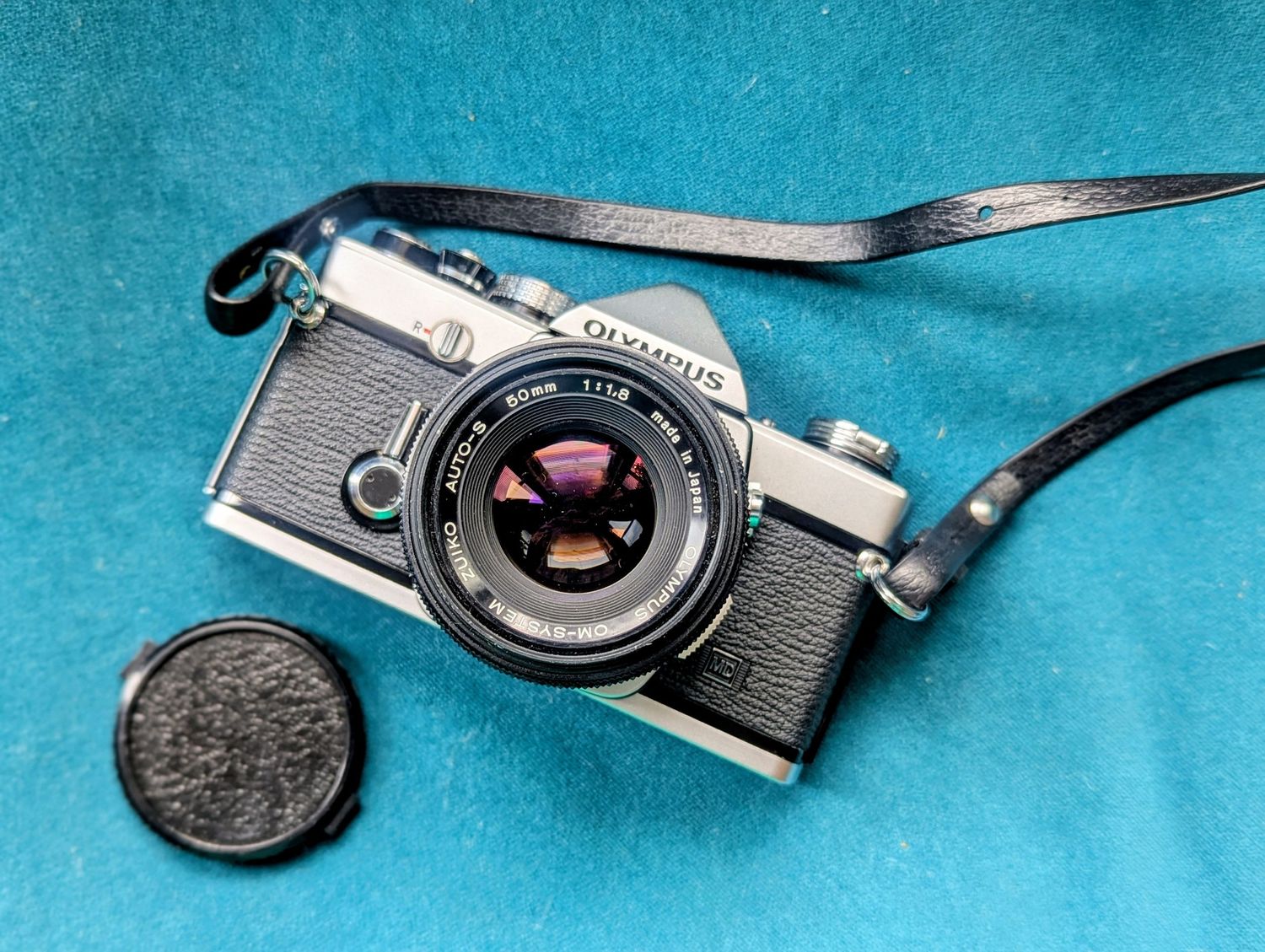
A couple of weeks ago I wrote a piece for Amateur Photographer about the Camera Obsolete? exhibition at this year's Belfast Photo Festival — the one where visitors were handed a hammer and invited to smash up perfectly good film cameras, as a kind of performance piece about the mechanical era “collapsing.”
Let's just say... I didn't love the premise. My argument, in short, is that the real act of rebellion isn't destroying these cameras, it's saving them.
Nobody is making spare parts for most of these cameras. Every one smashed for a sculpture is a camera, and the memories it could have gone on to make, that are gone for good.
The very fact that secondhand film camera sales keep rising, that darkrooms keep filling up and the increasing appetite for creating physical media is growing globally, all demonstrates a very different trajectory to the story the exhibition was telling.
What's been the best part though, is what has been happening since the magazine published it.
Conversations have been taking place, people from the community are writing back with their own take — and the responses are all adding something to the discussion around the original piece. So I wanted to bring a couple of them together here for you...
“We've lost the ability to create and build memories”
Slawomir picked up on something I didn't have space to articulate in the piece but fully agree with: that the waiting isn't a weakness of analogue process — it is often the process doing its job.
He described the old rhythm of shooting on holiday, then having to wait for the lab, sometimes days or weeks, to get your prints back. In that gap, he says, you were unconsciously processing the experience yourself — turning it over, letting your own perception of it settle, so that by the time the prints landed in your hands, “you had a world created in your head.”
Compare that to now, where a photo is viewed the instant it's taken, before it means anything, and is often gone after a single share.
His plan going forward says it all: he's decided that rather than developing the films he shoots the moment he gets home, he's going to lean into that processing time, let his rolls sit in the fridge for months and develop a batch later on, in one go — maturing them, as he puts it, “like a good wine.”
“It's simply human nature to want something physical”
John's response came from a different angle entirely — less about memory, more about a shift he's noticing in the culture around him. Since picking the camera back up, he's had far fewer comments that “film is dying” and a lot more “oh, that's a cool camera!” — and not just from photography circles.
His own sister, who he says has zero interest in the technical or artistic side of the medium, recently asked to borrow a point-and-shoot. His read on it: this isn't a photography trend so much as a broader human one, the same instinct that drove the vinyl revival — a pull toward having something physical to show for an experience.
John also came back with a second thought: it's not just film that's been affected. He pointed out that printing from digital has quietly fallen away too, largely because the local photo lab — the easy, everyday route to a physical print — has all but disappeared. Digital shooters are just as capable of losing something physical from the process as anyone who never leaves the house without a film camera.
“Not an option to spray and pray”
Jed came at it from the digital side too — a long-time digital photographer who's recently taken up film. For him, the appeal is the discipline film demands before you press the shutter: choosing the right stock for the shot you're picturing, working within the hard limit of a 36-exposure roll.
There's no “spray and pray,” no shooting a hundred frames and sorting it out later. What looks like a limitation from the outside is, in his experience, exactly what sharpens your creative choices and builds real technical skill.
“Nobody is making spare parts”
Aviva's response zeroed in on the same practical worry I'd raised in the original piece — that nobody manufactures spare parts for these cameras anymore, so every one destroyed for art is one that can never be repaired or cannibalised to keep another running.
In a world already producing more waste than it can handle, she felt just as strongly that smashing functional, repairable tools isn't a radical statement. It's a spectacle.
“People have lost the appreciation of purely mechanical objects”
Graham brought an engineer's eye to it. Trained in engineering himself, he talked about the specific joy of watching a machine you understand operate exactly as it should — and how much of that appreciation for mechanical objects we've lost as a culture, where things are made to be thrown away rather than understood.
He owns two Rolleiflex 4.5s, fully mechanical apart from the light meter, and thinks people would feel differently about cameras like his if they could actually see how they work — a stripped-back, oversized SLR you could watch in motion, showing off the complexity most people never get to see.
Great to see the subject being discussed he said — just a shame the exhibition happened at all.
“Smashing them is offensive on so many levels”
Pete was angry. His view: installations like this expose a real lack of self-awareness in the artist, who mistakes sparking any reaction — including everyone present recognising what a stunt it is — for the whole purpose of art.
But his sharpest words were for the festival organisers, for platforming something he sees as flatly offensive to a growing number of photographers. Classic cameras, he pointed out, are a finite commodity. Dismantling one that's genuinely beyond repair is fine. Smashing a working one is something else entirely — and to him, it's offensive on every level.
“One less that could risk getting smashed to bits”
BByBPhoto took the conversation somewhere I hadn't expected: typewriters. They'd recently bought themselves a mechanical typewriter and mentioned the documentary California Typewriter, which has its own story arc about typewriter parts being repurposed as art — a different situation to cameras being smashed for a sculpture, they were careful to note, and one they'd genuinely recommend watching for how much meaning sits behind it, even if that meaning isn't a straightforwardly positive one.
But the part that stuck with me was the ending: they now have a typewriter doing exactly what it was built to do, rather than sitting in pieces somewhere as art. One less object at risk of ending up under a hammer.
Where this leaves us
Seven very different responses, but they come from the same place: this isn't nostalgia, and it isn't a niche hobby clinging on. It's people — inside the community and well outside it — rediscovering that the resulting physical media and the friction, discipline and waiting that are essential parts of analogue photography, are not the cost of the medium making it obsolete, they're the whole point.
If you've got your own reaction to the piece, or to what's been shared here, let me know (links below) — I'd love to keep adding to this.
Further Notes:
You can read the original piece on Amateur Photographer: The Camera is Not Obsolete - You're Just Not Paying Attention
If you've got something to add to the conversation, you can join the community here via the Membership or drop me a message here